
Blog on RFID Technology and IoT Solutions
Blog Home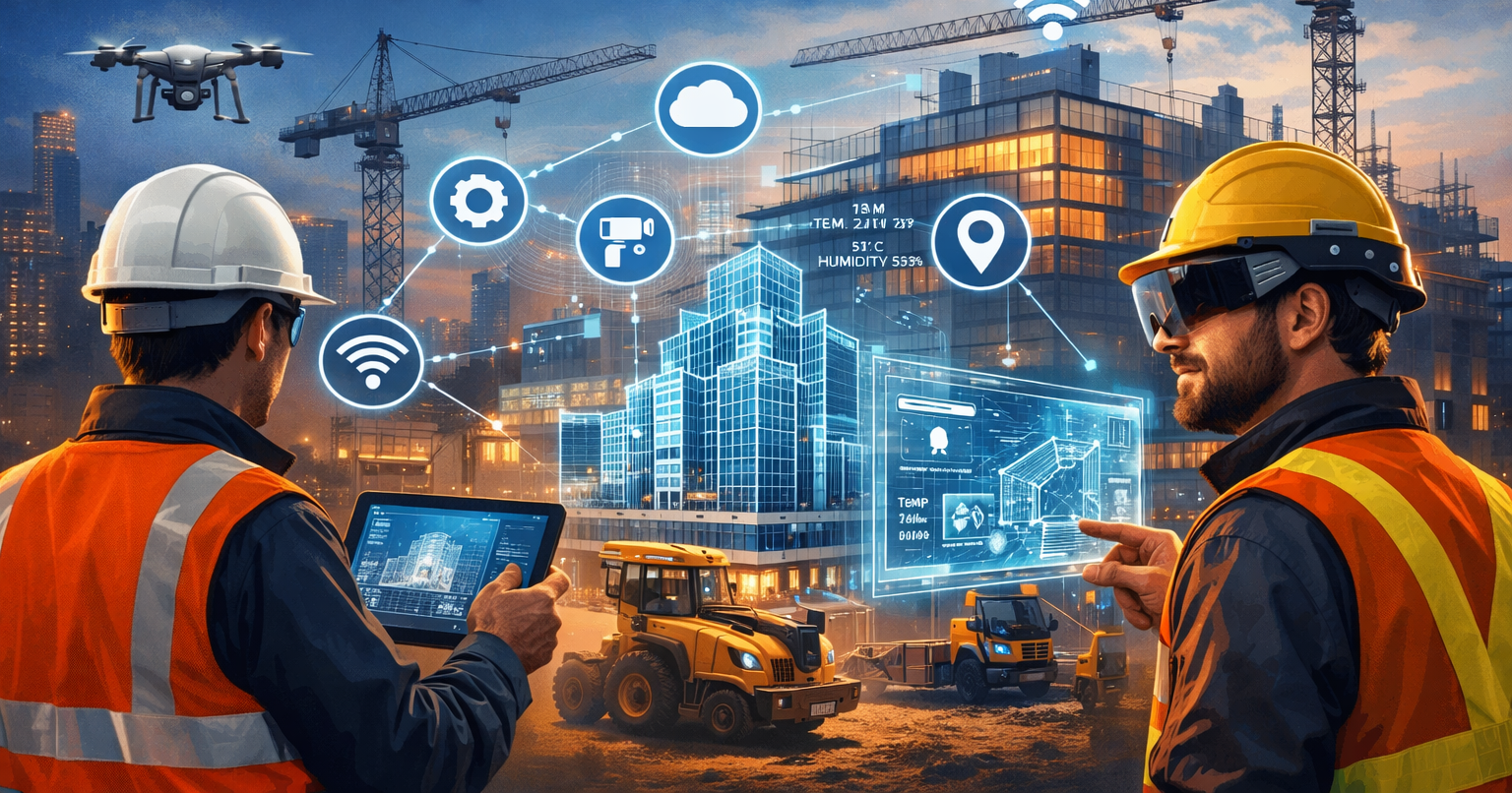
Revolutionizing Construction in 2026: How IoT is Shaping Smart Building Sites
17 March 2026The construction industry has traditionally been associated with labour-intensive work, complex logistics, and a high risk of delays or cost overruns. However, in 2026, a technological revolution is reshaping the way buildings are designed, managed, and constructed. At the heart of this transformation is the Internet of Things (IoT), which is turning traditional construction sites into smart, data-driven ecosystems. By integrating connected sensors, wearable devices, and real-time analytics, IoT is enhancing safety, efficiency, and productivity in ways that were unimaginable just a few years ago.
Understanding IoT in Construction
The Internet of Things refers to the network of interconnected devices that can collect, exchange, and analyse data automatically. In construction, IoT devices range from sensors embedded in equipment to smart wearables worn by workers, drones surveying sites, and environmental monitors tracking conditions. These devices generate massive volumes of data that managers can leverage to make informed decisions, reduce risks, and improve operational efficiency.
The adoption of IoT in construction is not just a trend—it’s a necessity. According to recent studies, construction projects often face delays of up to 20% of their expected timeline, primarily due to mismanagement, equipment failure, or unsafe working conditions. IoT mitigates these risks by enabling real-time monitoring and predictive insights, allowing project managers to respond proactively rather than reactively.
IoT-Powered Smart Equipment
One of the most impactful applications of IoT in construction is smart machinery. Heavy equipment like cranes, bulldozers, and concrete mixers can now be fitted with IoT sensors to monitor performance metrics such as fuel consumption, operational efficiency, temperature, and mechanical wear.
For example, predictive maintenance algorithms can detect early signs of equipment failure and alert operators before a breakdown occurs. This reduces downtime, minimizes repair costs, and extends the lifespan of expensive machinery. Smart equipment also allows managers to track utilization rates, ensuring that resources are allocated efficiently and that machinery is not idling unnecessarily.
Moreover, autonomous or semi-autonomous equipment integrated with IoT can execute repetitive tasks with greater precision, freeing human workers for complex and creative tasks. This combination of automation and connectivity is reshaping productivity metrics on modern construction sites.
Real-Time Site Monitoring for Safety and Efficiency
Construction sites are inherently risky environments. Falls, equipment accidents, and environmental hazards are constant concerns. IoT addresses these challenges through real-time site monitoring. Smart cameras, motion sensors, and environmental devices track worker movements, detect hazardous conditions, and provide alerts if safety protocols are breached.
For instance, sensors can detect the presence of toxic gases or extreme temperature conditions and trigger immediate alerts. Drones equipped with cameras can monitor large construction sites from the air, ensuring that workers are following safety protocols and that materials are being handled correctly.
Beyond safety, real-time monitoring also improves project efficiency. Managers can see exactly where bottlenecks occur, track the movement of materials, and ensure that every part of the site operates smoothly. This level of visibility enables faster decision-making and reduces costly delays.
Wearables: The Future of Workforce Management
Another key IoT innovation in construction is the use of wearable technology. Smart helmets, vests, and wristbands track vital signs, monitor fatigue levels, and detect dangerous movements. Some devices even provide geofencing alerts, warning workers if they enter restricted or hazardous zones.
Wearables not only improve safety but also optimize workforce productivity. Managers can track how labour is being utilized, identify workflow inefficiencies, and provide timely interventions to balance workloads. Additionally, in case of accidents, wearable devices provide precise data on location and circumstances, facilitating faster emergency response.
Data-Driven Project Management
The true power of IoT lies in its ability to generate actionable data. Every sensor, device, and system on a smart construction site produces valuable insights that can be analysed to improve planning, scheduling, and resource allocation.
IoT-integrated project management platforms consolidate data from multiple sources, allowing managers to monitor progress in real time. This enables accurate forecasting of timelines and budgets, early detection of bottlenecks, and better collaboration between stakeholders. For instance, IoT data can help determine the optimal delivery schedule for materials, reducing storage costs and preventing shortages.
Moreover, these platforms can simulate different project scenarios, allowing teams to predict outcomes and adjust strategies before issues arise. This level of predictive intelligence represents a major shift from the reactive project management approaches that have dominated construction for decades.
Sustainability and Resource Optimization
Sustainability has become a critical consideration in construction projects. IoT contributes to eco-friendly building practices by monitoring energy consumption, waste generation, and material usage. Smart sensors track the use of resources like water, electricity, and raw materials, enabling managers to reduce waste and improve efficiency.
For example, IoT can optimize concrete mixing to prevent excess material usage, or track energy usage in temporary site offices to minimize carbon footprint. By integrating sustainability metrics into project management, construction companies can meet regulatory requirements, reduce costs, and enhance their reputation among environmentally conscious clients.
Challenges and Considerations
While IoT offers tremendous benefits, implementing a smart construction site is not without challenges. Security is a major concern, as interconnected devices increase vulnerability to cyberattacks. Data privacy must also be managed carefully, especially when monitoring workers through wearables.
Furthermore, adopting IoT requires investment in hardware, software, and training. Construction companies must ensure that their workforce is digitally literate and capable of interpreting and acting on IoT-generated insights. Despite these challenges, the return on investment is substantial, given the reductions in downtime, accidents, and resource wastage that IoT facilitates.
The Road Ahead
The construction industry in 2026 is entering a new era of intelligence, connectivity, and efficiency. IoT is the cornerstone of this transformation, enabling smart building sites that are safer, faster, and more sustainable. As technology advances, the integration of artificial intelligence, robotics, and augmented reality with IoT will further elevate construction practices.
Companies that adopt IoT early will enjoy a competitive advantage, benefiting from reduced costs, enhanced project visibility, and improved client satisfaction. The future of construction is not just digital—it’s smart, connected, and driven by data.
Conclusion
IoT is revolutionizing construction by turning traditional sites into dynamic, intelligent ecosystems. From predictive maintenance and real-time monitoring to wearable safety devices and data-driven project management, IoT is enhancing every aspect of construction operations.
In 2026, embracing IoT is no longer optional—it’s a strategic necessity. Smart construction sites improve efficiency, safety, and sustainability, paving the way for a future where projects are delivered faster, costs are reduced, and buildings are constructed smarter than ever before.
- Intellistride.com
- Blog
- Revolutionizing Construction in 2026: How IoT is Shaping Smart Building…