
Blog on RFID Technology and IoT Solutions
Blog Home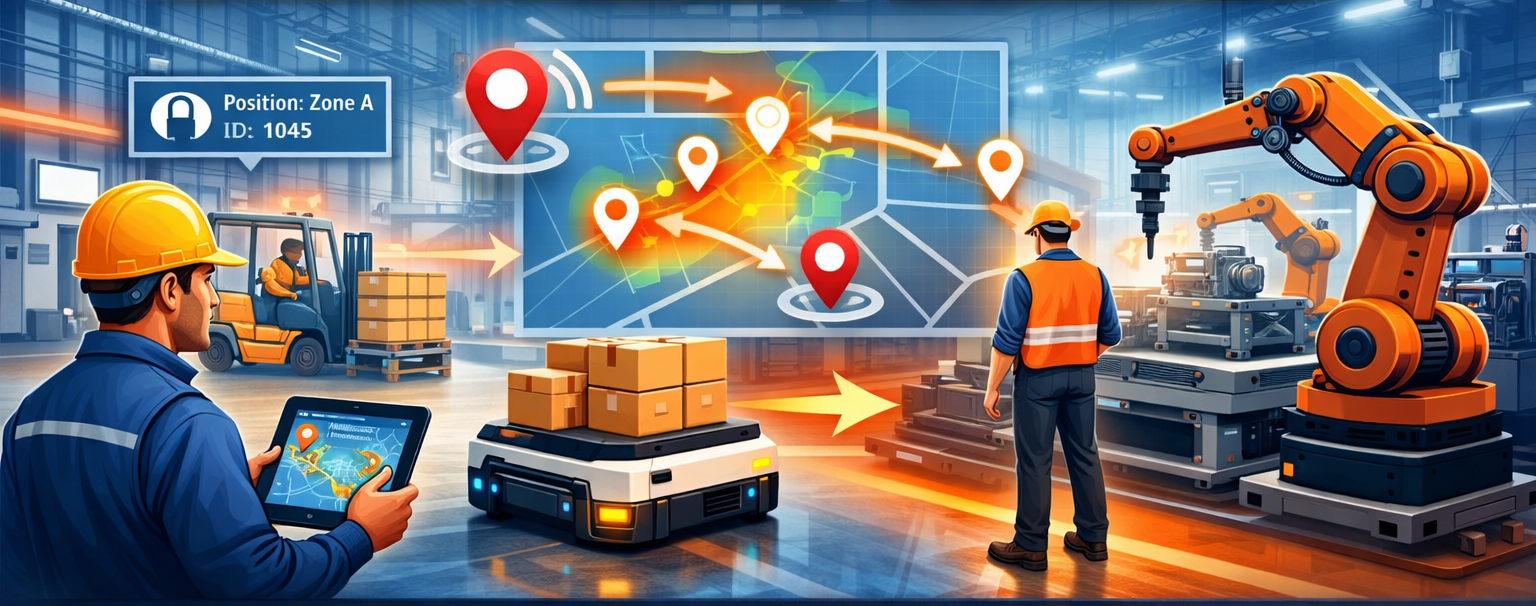
How Manufacturing Facilities Use Real-Time Location Systems (RTLS)
18 March 2026Introduction
In today’s competitive manufacturing environment, efficiency, safety, and asset utilization are critical for success. Real-Time Location Systems (RTLS) have emerged as a transformative technology that enables manufacturers to track and manage assets, personnel, and materials with precision. By providing real-time visibility across the facility, RTLS improves operational performance, reduces costs, and enhances safety.
This blog explores how manufacturing facilities implement RTLS, its key use cases, benefits, and challenges, providing a comprehensive overview for facility managers and industry professionals.
What is RTLS?
Real-Time Location Systems (RTLS) use wireless technologies such as RFID, Wi-Fi, Bluetooth, UWB (Ultra-Wideband), or infrared to identify and track the location of assets, equipment, and personnel in real time. Data collected from RTLS devices is transmitted to centralized platforms, providing actionable insights for operational management.
Components of an RTLS:
- Tags or sensors: Attached to assets, equipment, or personnel
- Readers or gateways: Detect and communicate with tags
- Software platform: Visualizes location data and integrates with existing manufacturing systems
Key Use Cases of RTLS in Manufacturing Facilities
1. Asset Tracking and Utilization
RTLS enables manufacturers to monitor the location and status of critical assets such as machinery, tools, and vehicles.
Applications:
- Identify idle or underutilized equipment
- Optimize equipment allocation across production lines
- Prevent asset loss or misplacement
Impact:
- Improved operational efficiency
- Reduced downtime and equipment costs
2. Inventory and Material Management
Tracking raw materials, work-in-progress items, and finished goods in real time enhances inventory control.
Benefits:
- Reduce overstocking and material shortages
- Streamline production workflows
- Minimize wastage and spoilage
Example: RFID-enabled RTLS tags on pallets or containers allow manufacturers to locate materials instantly.
3. Workforce Safety and Productivity
RTLS can monitor the location of personnel, enhancing both safety and productivity.
Use Cases:
- Detecting unauthorized access to hazardous zones
- Monitoring staff movement for efficient task allocation
- Tracking working hours and location for labor optimization
Benefit:
- Reduced accidents and improved compliance with safety protocols
- Better workforce management and task efficiency
4. Predictive Maintenance
RTLS combined with IoT sensors can monitor the usage and performance of machines, helping predict maintenance needs.
Impact:
- Prevent unplanned downtime
- Extend the lifespan of equipment
- Lower maintenance costs through proactive scheduling
5. Lean Manufacturing and Process Optimization
RTLS provides data on material flow, equipment usage, and worker movement, enabling lean manufacturing practices.
Applications:
- Identify bottlenecks and inefficiencies
- Optimize production line layouts
- Improve throughput and reduce cycle times
Result:
- More streamlined operations
- Reduced operational waste and costs
6. Compliance and Traceability
RTLS enhances traceability for quality control and regulatory compliance.
Use Cases:
- Track components in regulated industries like pharmaceuticals or food processing
- Provide audit trails for production processes
- Monitor environmental conditions during transport and storage
Benefit:
- Ensures product quality and regulatory compliance
- Builds customer trust and accountability
Benefits of RTLS in Manufacturing
- Improved Operational Efficiency: Real-time tracking reduces delays and optimizes asset usage
- Enhanced Safety: Monitors personnel and equipment in hazardous areas
- Cost Reduction: Minimizes downtime, lost assets, and excess inventory
- Data-Driven Decision Making: Provides actionable insights for continuous improvement
- Better Traceability: Ensures compliance and quality control
- Increased Productivity: Optimizes workflow and labor allocation
Challenges in Implementing RTLS
While RTLS offers significant advantages, manufacturers should consider potential challenges:
- High Initial Costs: Investment in hardware, software, and integration
- Data Security: Protecting sensitive location and operational data
- System Integration: Ensuring compatibility with existing ERP and MES systems
- Maintenance and Calibration: Regular system updates and tag maintenance are required
- Training: Employees need to adapt to new workflows and technology
Best Practices for RTLS Deployment in Manufacturing
- Start with pilot projects in high-impact areas
- Choose technology (RFID, UWB, Wi-Fi) based on facility size and environment
- Ensure integration with existing systems for seamless operation
- Provide employee training and clear usage guidelines
- Monitor system performance and analyze data for continuous optimization
Future of RTLS in Manufacturing
As manufacturing moves toward Industry 4.0, RTLS will play an increasingly critical role. Integration with IoT, AI, and predictive analytics will enable fully automated, data-driven factories. Real-time insights from RTLS will support smart production lines, autonomous material handling, and proactive maintenance strategies, making manufacturing more agile, efficient, and sustainable.
Conclusion
Real-Time Location Systems are transforming manufacturing facilities by providing visibility into assets, materials, and personnel. From improving operational efficiency and workforce safety to enabling predictive maintenance and lean manufacturing, RTLS is a cornerstone technology for modern, data-driven factories. Manufacturers that adopt RTLS today position themselves for increased productivity, reduced costs, and long-term competitiveness.
- Intellistride.com
- Blog
- How Manufacturing Facilities Use Real-Time Location Systems (RTLS)