
Blog on RFID Technology and IoT Solutions
Blog Home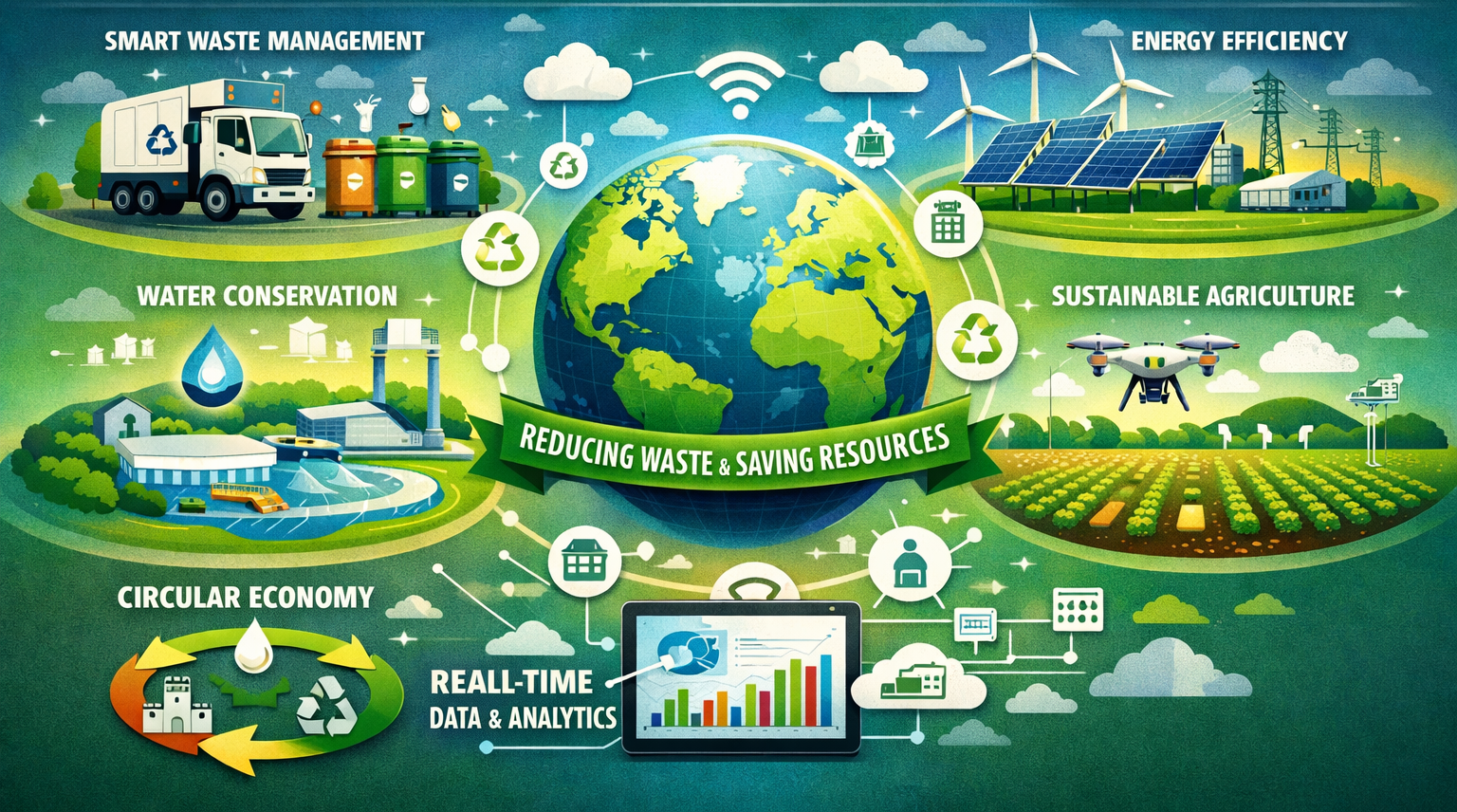
Smart Sustainability: Using IoT to Minimize Waste and Maximize Resources in 2026
21 March 2026In 2026, sustainability is no longer just a corporate buzzword—it’s a strategic imperative. Businesses, cities, and industries are under increasing pressure to reduce their environmental footprint while optimizing operational efficiency. The Internet of Things (IoT) is emerging as a powerful tool in this mission, enabling organizations to monitor resources, minimize waste, and make smarter decisions in real time.
IoT connects physical devices—sensors, smart meters, wearables, and machinery—to the internet, generating actionable data that can drive sustainability strategies. By leveraging IoT, organizations are reducing costs, improving efficiency, and contributing to environmental preservation—all at the same time.
The Role of IoT in Resource Optimization
Resource optimization is at the core of sustainable operations. IoT sensors provide real-time visibility into energy, water, and material usage, enabling organizations to identify inefficiencies and adjust processes instantly.
For instance:
- Energy management: Smart meters and IoT-enabled energy systems monitor electricity consumption across buildings or factories. By tracking usage patterns, these systems automatically adjust lighting, heating, and cooling to match occupancy and environmental conditions.
- Water conservation: Sensors in water systems detect leaks or overuse, allowing organizations to prevent waste before it escalates into costly losses.
- Material tracking: In manufacturing and construction, IoT sensors monitor raw materials, ensuring precise usage and reducing excess inventory that might otherwise be discarded.
These technologies allow companies to streamline operations while minimizing waste, a win-win for sustainability and profitability.
IoT-Enabled Waste Reduction
Waste reduction is one of the most tangible benefits of IoT adoption. Connected devices can monitor, sort, and even predict waste generation, allowing organizations to intervene proactively.
- Smart bins: IoT-enabled waste bins in offices, campuses, and public spaces can detect fill levels and automatically alert waste management services. This ensures timely collection and prevents overflow, while also improving recycling efficiency.
- Automated recycling: Sensors can identify types of materials in waste streams, enabling automated sorting. This reduces contamination in recycling processes and increases the amount of waste that can be successfully reused.
- Predictive analytics: IoT systems can forecast waste generation patterns in manufacturing plants or retail operations, allowing managers to adjust production schedules or inventory levels to reduce overproduction.
By integrating waste management with IoT, companies are not only reducing landfill contributions but also cutting operational costs and improving overall efficiency.
Sustainability in Smart Buildings
Buildings account for a significant portion of energy and water consumption globally. IoT-enabled building management systems (BMS) are playing a pivotal role in creating sustainable, resource-efficient environments.
- Dynamic energy usage: IoT sensors track occupancy and environmental conditions to optimize heating, ventilation, air conditioning, and lighting systems.
- Water monitoring: Sensors in plumbing systems detect leaks, measure usage, and identify areas for efficiency improvements.
- Maintenance optimization: Predictive maintenance ensures that building systems run efficiently, reducing energy waste from malfunctioning equipment.
Smart buildings equipped with IoT are reducing operating costs, lowering carbon emissions, and enhancing occupant comfort, all while providing valuable sustainability data for reporting and compliance.
IoT in Smart Cities and Public Infrastructure
The benefits of IoT for sustainability extend beyond individual organizations. In 2026, smart cities leverage IoT to optimize energy usage, reduce waste, and improve public services:
- Smart lighting: Streetlights equipped with motion sensors adjust brightness based on pedestrian or vehicular traffic, saving energy without compromising safety.
- Intelligent transportation: IoT-enabled traffic management systems reduce congestion, lower fuel consumption, and minimize emissions.
- Waste management: IoT monitors optimize city-wide waste collection routes, decreasing unnecessary trips and cutting emissions from garbage trucks.
By integrating IoT across infrastructure systems, cities can achieve greater resource efficiency, improve quality of life, and support ambitious environmental goals.
Data-Driven Sustainability Strategies
IoT is not just about monitoring—it’s about using data to drive decision-making. Organizations can leverage IoT analytics to track key sustainability metrics, assess performance, and implement continuous improvements.
- KPIs for sustainability: IoT provides accurate data on energy usage, water consumption, material efficiency, and waste generation, enabling companies to set measurable sustainability goals.
- Regulatory compliance: Environmental regulations are becoming increasingly stringent. IoT ensures that organizations maintain compliance by providing accurate, real-time reporting.
- Carbon footprint reduction: Data-driven insights allow companies to identify high-emission processes and optimize them, contributing to carbon neutrality objectives.
The actionable intelligence from IoT ensures that sustainability is embedded in operations, rather than being treated as an afterthought.
Industrial Applications: Manufacturing and Supply Chains
IoT’s impact on sustainability is especially notable in manufacturing and supply chains. These sectors are often resource-intensive, making them prime candidates for IoT-driven optimization:
- Inventory management: IoT systems track raw materials and finished products in real time, reducing overproduction and waste.
- Energy-efficient production: Sensors monitor machinery and production lines, enabling adjustments to reduce energy consumption without compromising output.
- Circular supply chains: IoT facilitates tracking and return of materials for reuse, supporting circular economy initiatives.
By integrating IoT throughout the supply chain, manufacturers are reducing costs, minimizing environmental impact, and improving operational resilience.
Challenges and Considerations
Despite the benefits, IoT adoption for sustainability comes with challenges:
- Data security: Connecting devices increases the risk of cyberattacks, making robust security measures essential.
- Integration complexity: Combining IoT devices with existing systems requires careful planning and investment.
- Data overload: Collecting massive amounts of data is useful only if it is properly analyzed and acted upon.
Organizations must address these challenges through strategic planning, employee training, and partnerships with IoT technology providers.
The Future of Smart Sustainability
The potential for IoT-driven sustainability is immense. In 2026 and beyond, we can expect:
- AI integration: Combining IoT with AI will enable predictive energy and waste management at unprecedented levels of efficiency.
- Cross-industry collaboration: Data sharing between companies and cities will optimize resource allocation at a regional level.
- IoT-enabled ESG reporting: Companies will increasingly rely on IoT data to provide transparent sustainability reporting to investors, regulators, and customers.
The future is one where technology and environmental responsibility are inseparable. Smart sustainability powered by IoT is transforming the way organizations operate, making efficiency, accountability, and ecological stewardship part of everyday business.
Conclusion
In 2026, IoT is more than just a technological innovation—it is a cornerstone of sustainability. From energy-efficient buildings and waste reduction in factories to smart city initiatives, IoT empowers organizations to monitor, optimize, and minimize their environmental footprint. By leveraging real-time data and actionable insights, businesses can save resources, cut costs, and make a meaningful impact on the planet.
As organizations embrace smart sustainability, IoT will continue to be a driving force, ensuring that environmental responsibility and operational excellence go hand in hand. The era of connected, sustainable, and efficient operations is here—and IoT is leading the way.
- Intellistride.com
- Blog
- Smart Sustainability: Using IoT to Minimize Waste and Maximize Resources…